



SEC-03 · Security & access
Intrusion alarm and perimeter security in Saudi Arabia that people still trust after month three
An alarm system fails twice: once when it misses a real intrusion, and again when false alarms train everyone to ignore it. We design against both.
How an intrusion and perimeter system works
A security system for a building or a site is a layered answer to four questions. Detect: sensors notice a person where nobody should be. Verify: a camera view, a second sensor or an audio check helps decide whether the alarm is real. Signal: the panel tells the right people, by siren, by display on a keypad or console, and by a message to a monitoring point. Respond: someone with a procedure goes to the place. A weakness in any of the four lowers the value of the other three.
Layers help. A fence sensor gives the earliest warning, a camera confirms it, an outdoor detector protects the building envelope, and indoor detectors cover the rooms that matter. Each layer buys time, and response time is the figure that decides whether a system works. We start by asking how long a response takes and how long an intruder needs, and design the layers to close that gap.
Indoor intrusion alarms

Intrusion systems combine detectors (dual-technology motion, door and window contacts, glass-break, seismic sensors on safes and walls), a control panel, keypads, and signalling to the people who respond. EN 50131 grades systems from 1 (low risk) to 4 (high risk). The grade drives detector type, tamper protection, signalling path redundancy and how the system resists being defeated. When a client or insurer specifies a grade, we design to it and document how each requirement is met.
Detector placement decides the false-alarm rate. Air-conditioning outlets, sunlight moving across a floor, and stock on high shelving all produce alarms when a motion detector is in the wrong place. The survey records those conditions for each area.
Fibre-optic perimeter fence detection

On long fence lines a sensing fibre cable is attached to the fence fabric. Climbing, cutting or lifting the fence creates vibration that the processor analyses. Two broad approaches exist:
- Zoned systems divide the perimeter into fixed zones and report which zone alarmed. Simple and robust, good for shorter perimeters.
- Distributed (location-resolving) systems locate the disturbance along a continuous cable, so one processor can cover kilometres and point a PTZ camera at the event.
Fence condition matters as much as the sensor. A loose, rattling fence produces alarms in the wind. We inspect and record fence tension, posts, gates and ground clearance during the survey and treat gates as separate zones with their own detection.
Nuisance alarms and verification

Wind, sandstorms, rain, animals and nearby traffic all produce signals. The fix is calibration on site with real conditions, per zone, and an alarm-verification step: each perimeter alarm brings up the camera view of that zone so an operator confirms before anyone is dispatched. We record the calibration settings so a later technician doesn't reset them blindly.
Choosing the detector for the job
| Detector | What it senses | Where it fits | Watch for |
|---|---|---|---|
| Dual-technology motion | Heat and microwave movement | Offices, corridors, shops, residential areas | Strong air-conditioning flow and sunlight on the floor |
| Pet-tolerant motion | Movement above a set size | Villas with pets | Climbing animals, small children |
| Door and window contact | Opening of a door or window | Every opening that leads outside or to a protected room | Gap tolerance on large or warped doors |
| Glass-break (acoustic) | The sound of breaking glass | Rooms with large glazing | Noise sources like alarms and machinery |
| Seismic or vibration | Drilling, hammering or cutting | Safes, strongrooms, walls and ceilings | Nearby plant or traffic vibration |
| Outdoor beam or radar | Crossing of a line or zone | Building faces, yards and roofs | Sand, heavy rain and vegetation |
The detector list is built from the site's actual spaces, not from a standard kit. Rooms that are used at night, like bedrooms, kitchens or guard rooms, are set up as separate partitions so the rest of the building can be armed around the people inside.
Perimeter technology options
| Technology | Strengths | Limits | Typical fit |
|---|---|---|---|
| Fibre-optic on the fence | Immune to electrical interference, long coverage, no power along the line | Needs a fence in good condition | Plots, compounds, utilities and long boundaries |
| Fence-mounted vibration sensors | Simple and well proven | Powered along the fence; sensitive to wind and rattling | Shorter perimeters |
| Buried cable | Hidden from view, works with walls and open ground | Soil and ground conditions matter, hard to repair | Open areas without a fence |
| Microwave or radar | Volumetric zone detection, good for open ground | Needs flat terrain and a clear zone | Gaps, gates and building faces |
| Thermal cameras with analytics | Detection and verification in one device | Higher cost per metre; analytics need tuning | Critical areas where the camera is also the sensor |
No technology is best everywhere. Many sites use a fence-based sensor on the line, with radar or video analytics at the gates and corners. The deciding factors are the length, the ground, the fence and the response time.
Integration with other systems
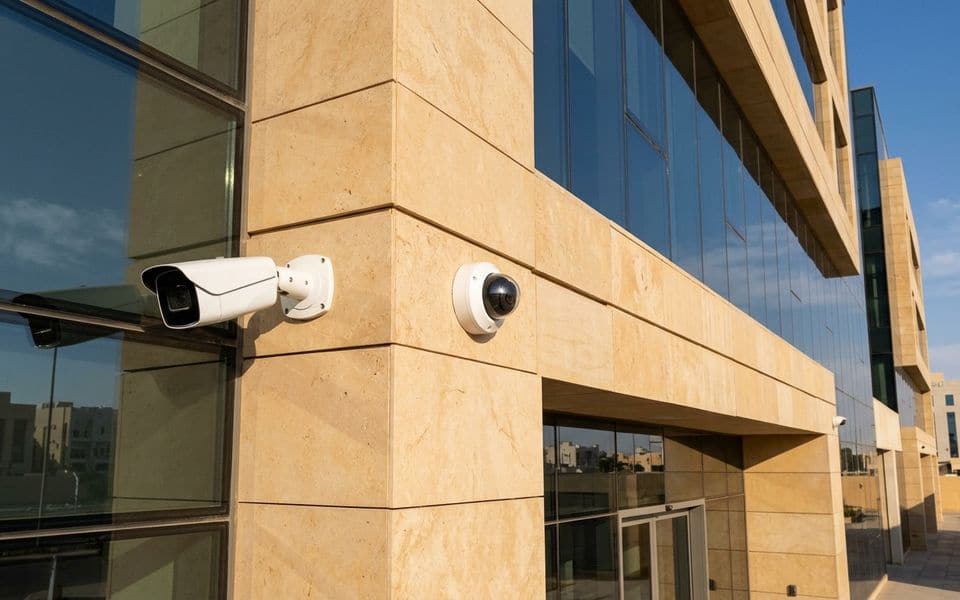
An alarm that does not tell you what is happening wastes response time. When a perimeter zone alarms, video surveillance brings the camera for that zone to the operator, or moves a PTZ camera to the location. The guidance on pixel density helps choose cameras that can confirm a person, not just notice movement. Access control can arm and disarm areas when the last person leaves or the first arrives, and prevents a door being armed while someone is inside. Remote fence lines or gates may use wireless links to carry the signal, and units powered by the sun, as described in mobile solar surveillance, protect places with no mains supply. Panels, sirens and sensors follow the power continuity design so a power cut is not an unprotected window.
Signalling, tamper and power
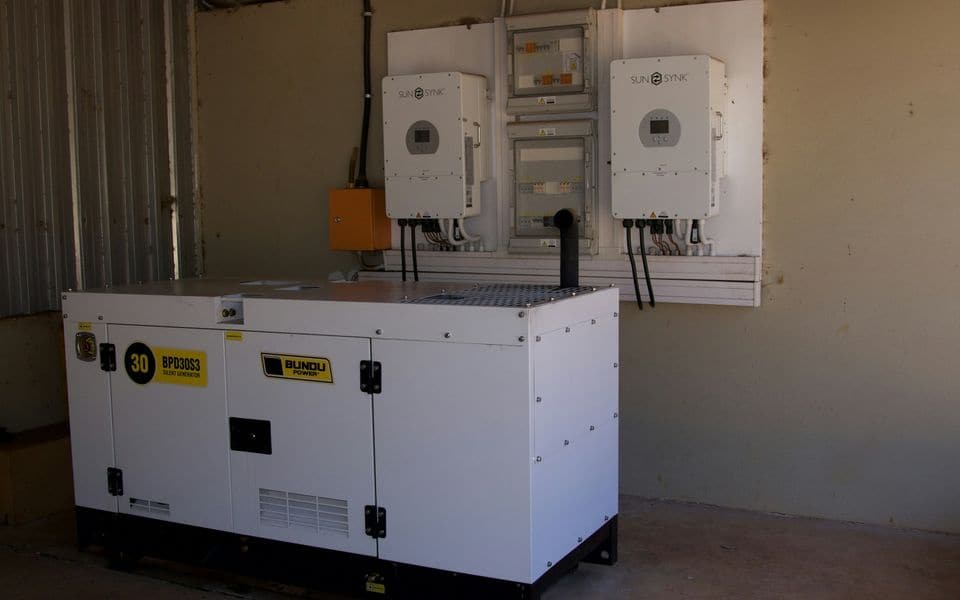
A system that can be silenced by cutting one cable is not protecting anything. Panels, detectors and sirens are fitted with tamper switches and supervised wiring, so opening an enclosure or cutting a cable raises an alarm. Signalling uses at least two routes where the risk justifies it, for example an IP connection plus a cellular back-up, so a down network does not hide an alarm. The panel's standby battery is sized for the hours the chosen grade and the site require, and the charger and battery are tested on a schedule. Outdoor sirens and beacons are located where they can be seen and heard, and their placement is agreed with neighbours and the authority where that matters.
Commissioning and handover checklist
- Walk test of every detector, with the result recorded per zone.
- Tamper test of every enclosure, siren and detector, and cable-cut test of supervised lines.
- Climb, cut and lift simulations at representative points on the fence, including gates.
- Each perimeter zone shown on the correct camera, with the operator confirming the view.
- Signalling test on each route, and confirmation that messages reach the recipients.
- Power failure test, with the battery duration measured.
- Arming, disarming and partial-setting tested with real users and written guides provided.
- Calibration settings, zone maps and as-built drawings delivered, with training for the people who respond.
Common mistakes and how to avoid them
- Putting a sensor on a poor fence: the wind makes a loose fence alarm. Repair or replace the fence first, or choose another technology.
- No agreed response: an alarm without a person who knows what to do is only noise. Write the procedure.
- One shared zone for a whole building: a single zone makes it impossible to tell where the intrusion is. Divide by area.
- Detectors facing heat sources: a detector aimed at a window or an air-conditioning outlet will alarm. Place them using the survey notes.
- Disabling zones to stop alarms: this hides the problem. Find the cause, calibrate and keep the zone live.
- No testing after changes: a new partition, a tree or a stack of stock can create blind spots. Retest after work in the area.
Maintenance and testing
A planned visit includes a walk test of detectors, tamper and cable checks, a test of every signalling path, battery load and charger checks, siren operation, and cleaning of outdoor sensors and camera lenses. For fence systems we re-check tension and ground clearance and review the calibration after the hot season and after a major dust or rain event. We read the alarm log for repeated alarms in the same place, which points to a cause that can be fixed. Our maintenance service sets the frequency from the risk and the conditions at the site.
Our part, start to finish
What we do on a intrusion and perimeter project
We select the equipment to fit your site, not to clear a stock list. We design the system, install and commission it, and keep it working.
Design & consulting
- Risk review and grade selection
- Detector layout with environmental notes
- Perimeter zoning and fence condition survey
- Alarm signalling and response design
- Integration plan with CCTV
Installation
- Panel, detector and keypad installation
- Fence sensor attachment and termination
- On-site calibration per zone
- Walk tests and climb/cut simulations
- Response procedures and user training
Maintenance
- Detector walk tests and tamper checks
- Fence sensor re-calibration after seasonal change
- Battery and signalling path tests
- Alarm history review to cut nuisance alarms
- Fault and call-out response
Before you buy
Questions to settle first
These decide cost and performance more than the brand on the box. We work through them with you at survey stage.
- Who responds to an alarm, and how quickly can they get there?
- Has an insurer or authority specified a grade?
- Is the fence in good enough condition to carry a sensor?
- Can each perimeter zone be seen by a camera for verification?
- How will the system behave during a sandstorm?
- Which areas are occupied at night and need partial setting?
Frequently asked questions
What does an EN 50131 grade mean for us?
The grade describes the level of risk the system is designed to resist, from 1 (low) to 4 (high). It sets requirements for detector type, tamper protection and signalling. Your insurer or authority may specify one; if not, we recommend one after a risk review.
How do we cut false alarms?
By placing detectors with the site's heat, air and light in mind, calibrating perimeter zones in real weather, and pairing each zone with a camera for verification. Reviewing the alarm log every few months removes most of the remainder.
Can a fence sensor be installed on any fence?
Only on a fence in good condition. A loose or damaged fence rattles in the wind and produces alarms. We survey the fence first and recommend repairs or another technology if needed.
Do we need a monitoring station?
You need someone who receives the alarm and acts. That may be your own guards, a control room or a monitoring provider you appoint. We design the signalling to reach whichever you choose.
Can the system be used while people are at home or in the building?
Yes. Partitions and partial setting let you arm the perimeter and unused rooms while occupied areas stay free.
What happens in a sandstorm or heavy rain?
Sensors are calibrated for local conditions, and video verification lets the operator see whether the alarm is a person or weather. Outdoor beam sensors are the most affected, so they are positioned and specified with that in mind.
Works alongside
Related systems
Gallery
Detection in context
Illustrations and computer-generated renderings show typical arrangements, not our projects; photographs are credited on the credits page. Select an image to enlarge it.
In Riyadh and across Saudi Arabia
Intrusion alarm and perimeter detection in Riyadh, Jeddah and across Saudi Arabia
Intrusion alarm systems for warehouses, shops and villas, and perimeter detection on fences with fibre-optic cable or sensors, with a zoned alarm panel, phone alerts and an optional link to a monitoring room. We design to reduce false alarms from wind and animals.
Common questions
Does the alarm send alerts to my phone?
Yes, through an app or message, and it can be linked to a monitoring company or the site's security room.
What is the best way to protect a long fence?
Fibre-optic cable or vibration sensors on the fence, cameras that verify the alarm before a response, and zoning so the breach point is known.
Manufacturers
Brands commonly specified in Saudi projects
- Honeywell
- Bosch
- Optex
- Senstar
- Paradox
- Pyronix
Names belong to their owners. Listing a brand shows the systems we design around; it does not mean a partnership or a dealership.