


BLD-06 · Building technology
Nurse call and queue management systems in Saudi Arabia
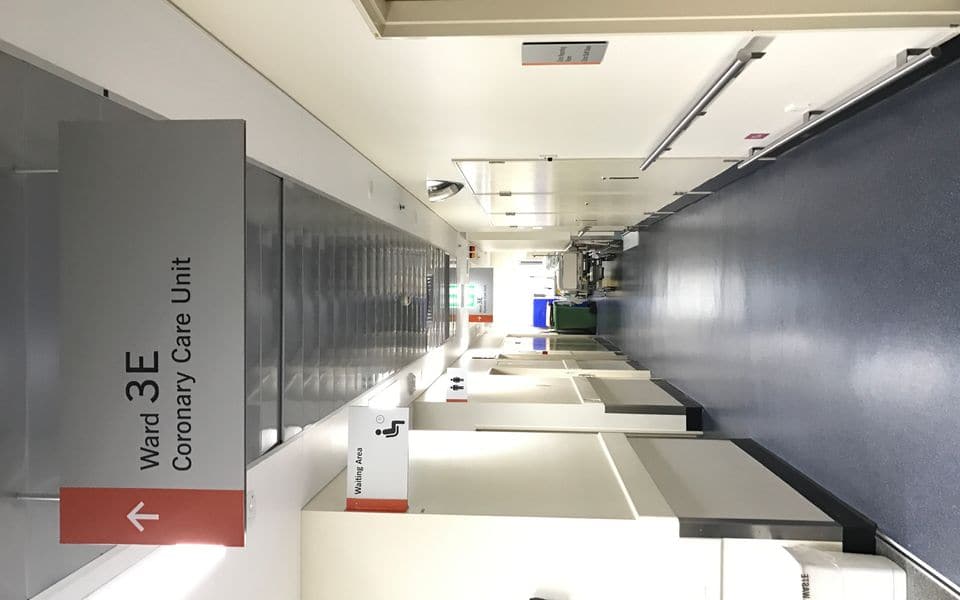
Two systems built around waiting: a patient waiting for a nurse and a customer waiting for a counter. Both should make the wait short and visible.
Nurse call

A nurse call system connects patients to staff: bedside call units and handsets, bathroom pull cords, emergency and code buttons, corridor lights, and duty station displays. Calls escalate to staff handsets (DECT or Wi-Fi) and to a second responder if not answered in time. Many projects specify recognised standards such as VDE 0834; when they do, we design and test to the stated standard and record how each requirement is met.
Reports matter as much as the call itself: response times per ward and shift are what nursing managers use to staff properly.
Queue management

Queue systems issue tickets (kiosk, SMS or app), call customers to counters with displays and audio, and report waiting and service times. We design the service categories and routing with the people who run the counters, because a queue system set up with the wrong categories creates the delays it was bought to remove.
How the two systems work end to end
Nurse call. A patient presses a bedside unit, pulls a bathroom cord or a staff member presses an emergency button. The call goes to a controller that knows the room, the bed and the type of call. A lamp lights above the room door and in the corridor, the duty station display shows the room and priority, and the call is sent to the handsets of the nurses assigned to that area. If nobody presses the presence button in the room within the set time, the call escalates to a second group or a supervisor. The call is cleared only when staff reset it at the bedside, so a call cannot disappear without someone having been there. Every step is logged with a time stamp.
Queue management. A customer takes a ticket at a kiosk, by SMS or from an app, choosing a service. The server places the ticket in the right queue, estimates the wait and shows the number on the waiting-area display when a counter becomes free, with a voice announcement. The staff member at the counter calls the next ticket, transfers it or marks it served. Every action is recorded, which gives managers waiting and service times by counter, hour and service.
Main parts and what each does
| System | Part | What it does |
|---|---|---|
| Nurse call | Bedside unit and handset | Normal call, cancel and a connection to a reading light or TV control where required |
| Nurse call | Bathroom pull cord, emergency button | Higher-priority calls from wet areas, with a distinct tone and indicator |
| Nurse call | Room door lamp and corridor display | Shows staff where a call is and what type it is |
| Nurse call | Controller and duty station | Routes calls, manages escalation timers and keeps the log |
| Nurse call | Staff handsets (DECT or Wi-Fi) | Bring the call to the nurse, with the room and call type on the screen |
| Queue | Ticket kiosk, SMS or app | Issues tickets for chosen services and sends turn alerts |
| Queue | Counter terminals and displays | Staff call, transfer and close tickets; customers see and hear the next number |
| Queue | Server and reports | Routing rules, waiting estimates and service-level reports |
Choosing the level of system
The right system depends on the type of care, the staffing model and the standard the project specifies.
| Basic lamp-and-buzzer | IP nurse call with handsets | Integrated with telephony and voice | |
|---|---|---|---|
| Best for | Clinics, day-care and care homes with one station | Wards and hospitals with several nurse teams | Large hospitals and care centres that need two-way speech |
| Call reaches | Corridor lamp and one station | Station and the right staff handsets | Handsets and speech between patient and nurse |
| Escalation | Manual | Automatic by timer and rules | Automatic, with the option of speech before attending |
| Reports | None or minimal | Response times by ward and shift | Same, plus call recordings if the policy requires them |
| Watch out for | Hard to grow later | Needs good coverage for the handsets | Depends on the telephone and network design |
Planning figures
These are design starting points. The clinical team and the stated standard decide the final values.
- Call points per room: a bedside unit per bed, a pull cord in each toilet and shower, and an emergency button where the clinical rules require one. Count every bed, because a shared room needs a unit per patient.
- Escalation times: a first escalation after roughly 30 to 90 seconds without attendance, depending on the call type, is a common starting point. A cardiac or emergency call escalates immediately.
- Handset count: one per nurse on shift, plus spares and chargers at the station. Coverage is surveyed so a call never drops in a lift lobby or stairwell.
- Queue categories: five to eight service categories are easier for customers and staff than twenty. We combine similar services and route them by counter skill.
- Displays: the next-number display should be readable from the furthest seat in the waiting area; this sets screen size and the number of screens.
- Wait estimate: people ahead multiplied by the average service time, divided by the number of open counters. It is only as good as the service times recorded, so we review it after a few weeks of data.
Standards, safety and cleaning
A nurse call is a safety-related system and the wiring and power behind it matter as much as the screen. When a project specifies a standard such as VDE 0834, we design and test to the stated version and record how each requirement is met. The common points are supervised wiring between devices so a broken cable raises a fault, a battery-backed supply so calls work in a power cut, a clear difference between normal, emergency and technical alarms, and a cancel function that works only in the room.
In patient areas, devices need surfaces and ingress ratings that stand up to the hospital's cleaning routine. We agree this with the infection-control team before choosing devices and cable entries.
Integration with the other systems
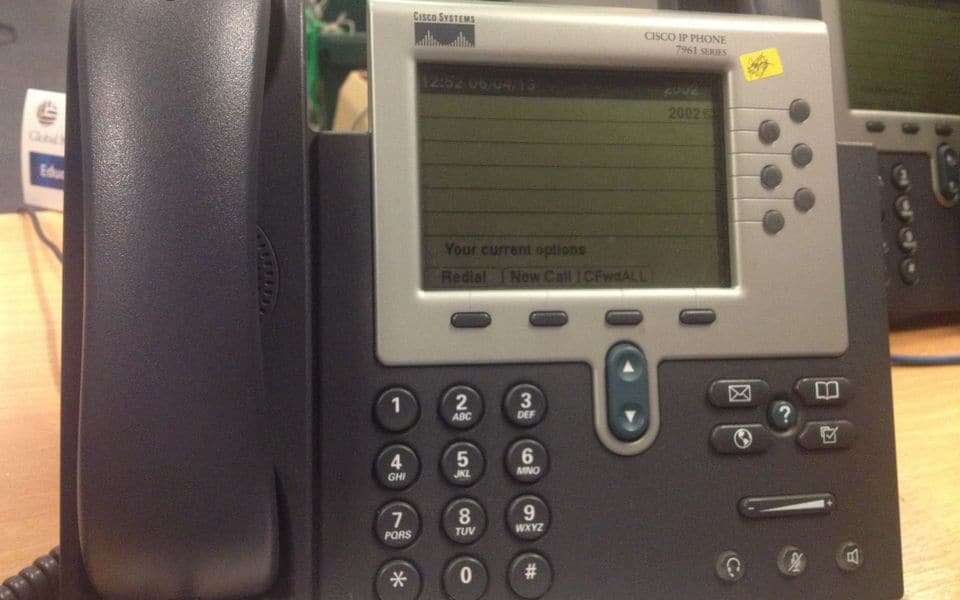
- Telephony and handsets: calls reach DECT or Wi-Fi handsets through the telephone system, see IP telephony and PBX.
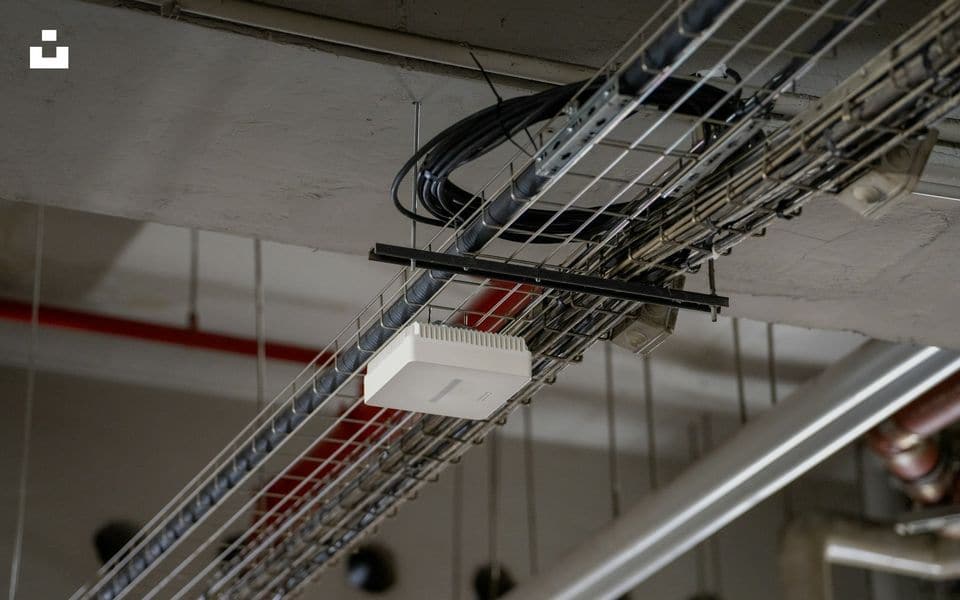
- Wi-Fi: if the handsets use Wi-Fi, the coverage design must meet their roaming and signal needs, see Wi-Fi and wireless links.
- Public address: queue call-outs and ward messages can share the zones of the public address system.
- Patient TV: the bedside unit can control the TV and reading light of the IPTV system.
- Intercom and doors: reception or nurse stations can answer entrance panels and release doors, see intercom and access control.
- Power: controllers, servers and station equipment sit on a UPS, planned under power continuity.
Commissioning and handover checklist
- Every call point is operated and the call is seen on the lamp, station and handset.
- Cancel works only at the room presence point.
- Escalation timers are tested end to end for every call type.
- A cut cable on a supervised line raises a fault at the station.
- The system continues to work in a mains failure and recovers after it.
- Handset coverage is walked through every area, including lifts and stairs.
- Queue tickets, counter calls, transfers and displays are tested for each service category.
- Report templates are shown to the managers who will use them.
- Handover includes the room and device schedule, the escalation rules, the backup of the configuration and staff training per shift.
Common mistakes and how to avoid them
- Escalation set once and never reviewed: wards change. We review the rules with the nursing managers after the first weeks.
- Too many ticket categories: customers pick the wrong one and the queue stalls. Keep the choices few and clear.
- Handsets without coverage: a call that does not reach a nurse is worse than none. Survey before choosing.
- Cancel from anywhere: a call can be cleared without anyone attending. Keep cancel at the bedside.
- No one owns the reports: data nobody reads changes nothing. Agree who reviews it and how often.
- Devices that cannot be cleaned: cracks and gaps become infection risks. Agree the materials with infection control.
Maintenance and testing
Safety systems must be tested on a routine. Under a maintenance contract we operate a sample of call points and pull cords on each visit, test supervised lines and battery backup, check handset batteries and charging, and review the event log for faults and for calls that were slow to answer. Queue kiosks, printers and displays are checked for paper, calibration and cleaning. In clinical areas, fault response has priority, and work is planned with the ward so that no bed is left without a working call point.
Our part, start to finish
What we do on a nurse call and queue project
We select the equipment to fit your site, not to clear a stock list. We design the system, install and commission it, and keep it working.
Design & consulting
- Ward or hall workflow review
- Device positions and escalation rules
- Integration with telephony and handsets
- Report requirements
Installation
- Device installation and programming
- Escalation and display testing
- Staff training per area
- Handover with test records
Maintenance
- Call point and pull cord tests
- Battery and handset checks
- Report reviews with managers
- Fault response with priority for clinical areas
Before you buy
Questions to settle first
These decide cost and performance more than the brand on the box. We work through them with you at survey stage.
- Which standard does the project specify, if any?
- How should unanswered calls escalate?
- What handsets do staff carry?
- Which reports do managers need?
- For queues: what service categories exist?
- Will customers book or join remotely?
Frequently asked questions
Can the call reach a nurse who is in another ward?
Yes. Calls can be routed to groups, to a named person or to a supervisor, and the rules can change by shift. Which route is used is decided with the nursing managers.
What happens if the network or the server fails?
That depends on the design. For safety-related calls we design a local fallback so call points still light the corridor lamp and station. The recovery behaviour is tested at commissioning.
Can patients speak to the nurse from the bed?
Yes, on systems with two-way speech. It reduces unnecessary visits, but it needs well-planned handsets or telephone integration. We confirm it against the hospital's policy.
Can the queue system serve clinics, banks and service counters?
Yes. The same logic serves clinics, pharmacies, banks and service centres. The difference is in the service categories and the reports, which we set up with the people who run the counters.
Can customers join the queue from their phone?
Yes, by SMS, QR code or an app, depending on the platform. The customer receives alerts when their turn is near, and the system does not need them to stand in the hall.
Can we extend the system later?
Yes, if the cabling and controller were sized with spare capacity. We plan spare call points, wiring routes and licences for the wards you may add.
Gallery
Nurse call and queues
Illustrations and computer-generated renderings show typical arrangements, not our projects; photographs are credited on the credits page. Select an image to enlarge it.
In Riyadh and across Saudi Arabia
Nurse call and queue management systems for hospitals in Riyadh, Jeddah and across Saudi Arabia
Nurse call installation for hospitals, medical centres and care homes in Riyadh, Jeddah and across Saudi Arabia: bed and bathroom call points, over-door lights, a nurse-station display and response-time logging; and queue management for clinics and service centres with tickets and calling displays. Installation of nurse call systems and queue management systems for hospitals, clinics and service centres in Riyadh, Jeddah and across Saudi Arabia.
Common questions
Does the system log response times?
Yes, the time of the call and the time of attendance are recorded for every call, which supports quality reporting.
Can nurse call reach the nurses' phones?
Yes, the call goes to the assigned nurse's phone or wireless handset, with escalation if unanswered.
What is the difference between nurse call and queue management?
Nurse call connects the patient to the nursing staff inside rooms; queue management organises visitors with tickets and call screens at reception.
Where is queue management used?
In clinics, hospitals, banks, service centres and any site where people wait their turn.
What is a queue management system?
A queue management system issues tickets and calls visitors on screens so people wait their turn in clinics, hospitals and service centres. We design and install it.
Manufacturers
Brands commonly specified in Saudi projects
- Ascom
- Jeron
- Honeywell
- Rauland
- Q-Matic
Names belong to their owners. Listing a brand shows the systems we design around; it does not mean a partnership or a dealership.