



BLD-04 · Building technology
Audio and public address systems in Saudi Arabia people can actually hear
A paging system that's loud but unclear is worse than none. We design for intelligibility first, then for volume and music.
Zones and coverage
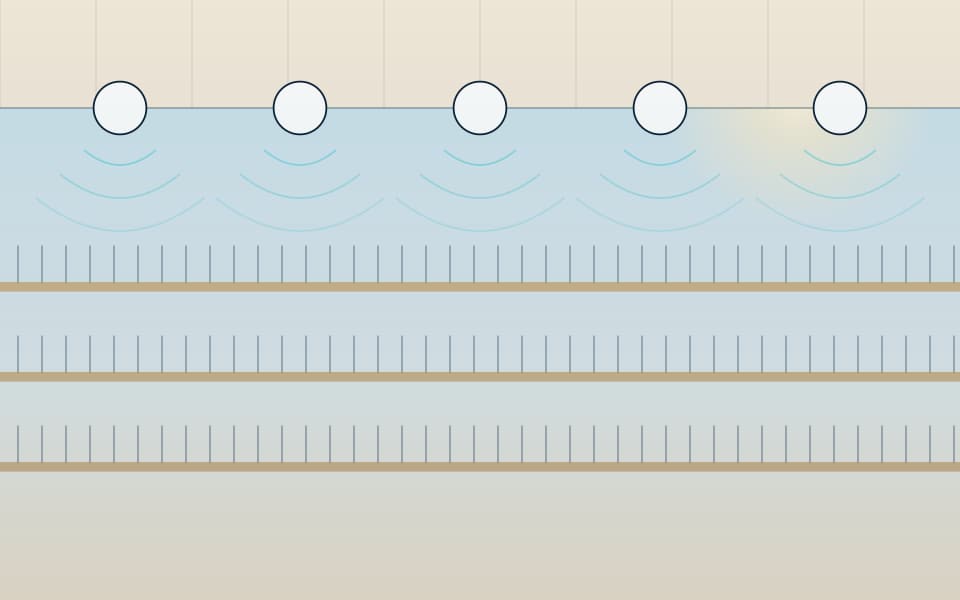
Zones follow how the building is used: lobby, restaurant, back of house, car park, outdoor areas. Each zone gets its own source selection and volume. Loudspeaker spacing follows ceiling height and the target level above background noise, so the sound is even rather than loud under each speaker and quiet between them.
Most commercial systems use 100 V line distribution, which lets many speakers run from one amplifier channel over long cable runs. Amplifier capacity is calculated from the tap settings with headroom, not guessed.
Intelligibility

Speech Transmission Index (STI) measures how well speech is understood in a space, from 0 to 1. Large hard spaces such as atriums and car parks reduce STI through reverberation. More speakers at lower volume, directional speakers, and keeping announcements clear of music all help. Where intelligibility is specified, we predict it at design stage and measure it after installation.
How the system works end to end
A public address system takes sound from a source, shapes it, amplifies it and delivers it to the right zone. Sources are paging microphones and desk stations, a music player or streaming service, recorded messages, and telephone paging from the PBX. They feed a digital signal processor (DSP) or matrix mixer, which applies equalisation, limiting and delay, decides which source goes to which zone, and enforces priority: a live announcement automatically lowers (ducks) the music and, where needed, overrides it. The processed audio goes to zone amplifiers that drive the loudspeaker lines.
In a 100 V line system each loudspeaker has a small transformer with selectable taps (for example 1, 2, 4 or 8 W), so the power a speaker takes is set at the tap, not by the cable length. A schedule engine starts and stops music, plays recorded messages such as opening-hours notices or prayer-time reminders where the operator wants them, and changes the volume by time of day, so the lobby is quieter at night without anyone touching a control.
Main parts and what each does
Each part has one job, and a fault is much quicker to find when the design keeps those jobs separate.
| Part | What it does |
|---|---|
| Paging microphone or desk station | Live announcements to chosen zones, usually with a chime and a push-to-talk button |
| Music and message sources | Network players, streaming sources and stored messages, using content the operator is licensed to play |
| DSP or matrix mixer | Routing, equalisation, delay, priority and ducking, and the schedule |
| Amplifiers | Power for each zone, with fault reporting and spare capacity |
| Loudspeakers | Ceiling, wall, pendant, horn, column or outdoor types, chosen by room height and noise |
| Wall controls or touch panel | Volume and source choice for staff, limited to what each user should change |
| Rack and power | Ventilated rack, surge protection and a UPS so the system restarts cleanly |
Choosing how the sound is distributed
The distribution method is the first big design decision. It sets cable cost, flexibility and how faults are found.
| 100 V line | Low-impedance speakers | Networked audio with local amplifiers | |
|---|---|---|---|
| Best for | Hotels, malls, offices, car parks with many speakers over long runs | Small rooms, restaurants and retail with a few speakers close to the amplifier | Large sites and campuses where audio travels over the data network |
| Cable | Long runs of ordinary speaker cable | Short runs only; thicker cable as the run grows | Network cable plus power at each amplifier or powered speaker |
| Flexibility | Speakers added or re-tapped easily | Limited by the amplifier load | Very high; zones changed in software |
| Fault finding | Line tests and amplifier monitoring | Simple, but shared lines hide faults | Per-device status on the network |
| Watch out for | Slightly reduced bass and fidelity | Poor choice for long distances | Needs a network designed for audio, with IT's agreement |
Planning figures for sizing
These are starting values for the design stage. Final numbers come from the room, the noise and the manufacturer's coverage data.
- Paging level: about 6 to 10 dB above the ambient noise at the listener, and no more, since louder only adds echo. Background music sits well below speech level, typically in the range of 60 to 70 dB(A) in lobbies and restaurants, agreed with the operator.
- Amplifier headroom: total tap power plus 20 to 30 %, so peaks are not clipped and the amplifier runs cool.
- Ceiling speaker spacing: roughly 1.5 to 2 times the distance from the ceiling to the listeners' ears, which in a 3 m ceiling means a speaker every 3 to 4 m. High atriums need pendant or column speakers instead.
- Line loss: keep it under about 0.5 dB (around 10 % of power) on the longest run, by choosing cable size from the run length and the connected power.
- Speech intelligibility: an STI of about 0.5 is the usual minimum for general paging, and 0.6 or more is a good target for halls where announcements matter. The project specification takes priority.
- Spare capacity: leave 10 to 20 % spare amplifier power and a few spare zone outputs for the changes every building sees.
Integration with the other systems
A PA system is rarely stand-alone. The connections we design in at the start are:
- Fire alarm system: a supervised mute or priority contact, so the music stops and nothing competes with the evacuation messages. A broken wire on that contact is reported as a fault. The fire alarm system itself belongs to the fire-protection contractor; our part is the release interface.
- Telephony: authorised extensions can page chosen zones over SIP from the IP telephony system.
- Intercom and queue systems: call-in announcements and door-station replies can use the same speakers, see intercom and queue management.
- Meeting rooms: rooms with their own sound system are muted or linked, as described under AV and meeting rooms.
- Network: networked audio needs its own VLAN and switch settings, planned with the network and wireless design.
- Power: the amplifier rack sits on a UPS so a short outage does not reboot the DSP and silence the building; see power continuity.
Commissioning and handover checklist
- Every loudspeaker is wired, tapped and recorded in a tap schedule.
- Line insulation and impedance are tested on each zone before the amplifier is connected.
- A listening walk with test signals covers every zone, and levels are measured and recorded.
- STI is measured where the specification asks for it.
- Priority, ducking and paging from each station are demonstrated.
- The fire-system mute or priority contact is tested together with the fire contractor.
- Schedules are loaded and checked across a full day.
- The system restarts by itself after a power cut, with the right levels.
- Handover includes as-built zone drawings, the tap schedule, a backup of the DSP file, user rights and staff training.
Common mistakes and how to avoid them
- One zone for the whole building: a restaurant and its lobby need different levels. Draw zones from how people use the space.
- Speakers too few and too loud: loud under the speaker and unclear elsewhere. More speakers at lower power give even sound and better STI.
- No headroom: an amplifier loaded to its limit distorts and fails early.
- Music and speech at the same level: use ducking so announcements stand out without being shouted.
- Indoor speakers outdoors: sun, dust and heat destroy them. Use rated outdoor models and sealed joints.
- No backup of the DSP file: a failed unit then means rebuilding the settings from memory. Keep the file with the handover documents.
Maintenance and testing
A PA system fails quietly: one speaker or one zone goes silent and nobody notices until it matters. Under a maintenance contract we test each zone line for open or short circuits, check amplifier temperature, fans and logs, play a test signal through every zone, review schedules and content, and re-check levels after any refit or partition change. Where the system includes line monitoring, faults are reported without waiting for a walk-round. We also keep the DSP backup current whenever settings change.
Voice alarm systems used for fire evacuation are life-safety systems with their own standards and approvals, designed and commissioned within the fire-protection scope. Our PA systems cover paging and background music, and receive a mute or priority signal from the fire system through a designed, supervised interface.
Our part, start to finish
What we do on a public address project
We select the equipment to fit your site, not to clear a stock list. We design the system, install and commission it, and keep it working.
Design & consulting
- Zone plan and coverage design
- Amplifier and tap calculations
- STI prediction where required
- Interfaces to fire system and paging sources
Installation
- Speaker and amplifier installation
- DSP tuning and level setting
- Schedules and paging stations
- Measurement and handover report
Maintenance
- Speaker and line checks
- Amplifier health checks
- Schedule and content updates
- Fault response
Before you buy
Questions to settle first
These decide cost and performance more than the brand on the box. We work through them with you at survey stage.
- Which areas need paging, and which need music only?
- How noisy are those areas at peak times?
- Who makes announcements, and from where?
- How must the system respond to a fire alarm?
- Do you need scheduled announcements or music?
- Are there outdoor areas exposed to sun and dust?
Frequently asked questions
Is a 70 V or 100 V line better?
Both work the same way. A 100 V line carries less current for the same power, so it loses less over long runs. We keep the whole system on one voltage and choose it to match the equipment specified.
Can the same system play music and make emergency evacuation announcements?
Evacuation messages belong to the fire alarm system, which the fire-protection contractor designs and commissions under fire regulations. We connect our PA to it so that music mutes and the PA stays out of the way during an alarm.
Can we reuse the existing ceiling speakers and cables?
Often yes, after tests. We check insulation, impedance and the condition of each speaker, and replace those that are damaged or badly placed. Old cables that fail the test are replaced rather than patched.
Can staff page from their desk phones?
Yes. With the telephone system, an authorised extension dials a page code and speaks to a chosen zone. Access is limited by extension, so only the right people can page.
Can each restaurant or area set its own music?
Yes, if each is built as a separate zone with its own source choice and volume. Limits on minimum and maximum volume stop settings drifting from what the operator wants.
When should we involve a designer?
Before the ceilings close. Speaker positions, cable routes and rack space are cheap to settle on drawings and costly to change after finishes are in. Send us the drawings and we will mark the zones and cable routes.
Gallery
Public address in context
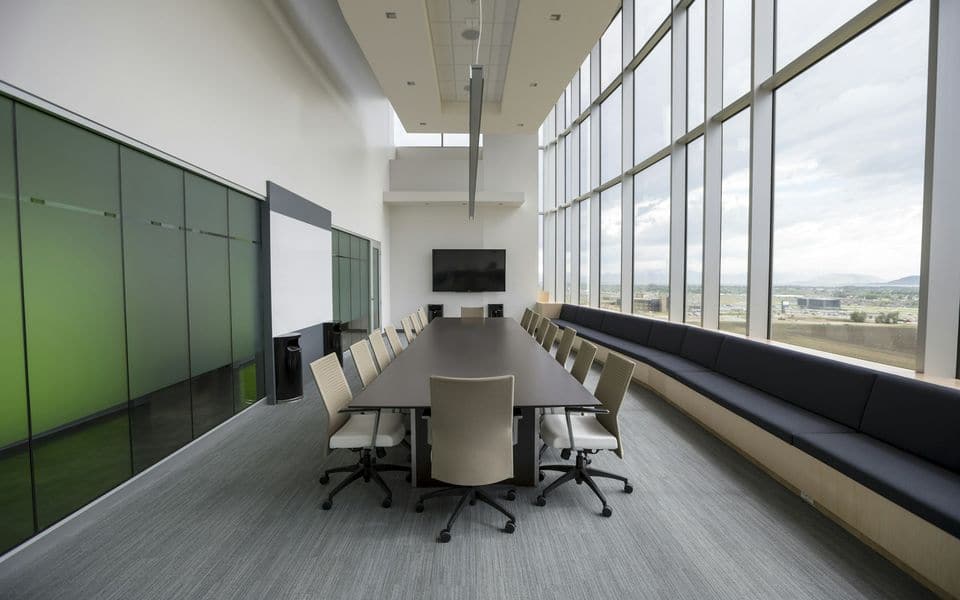
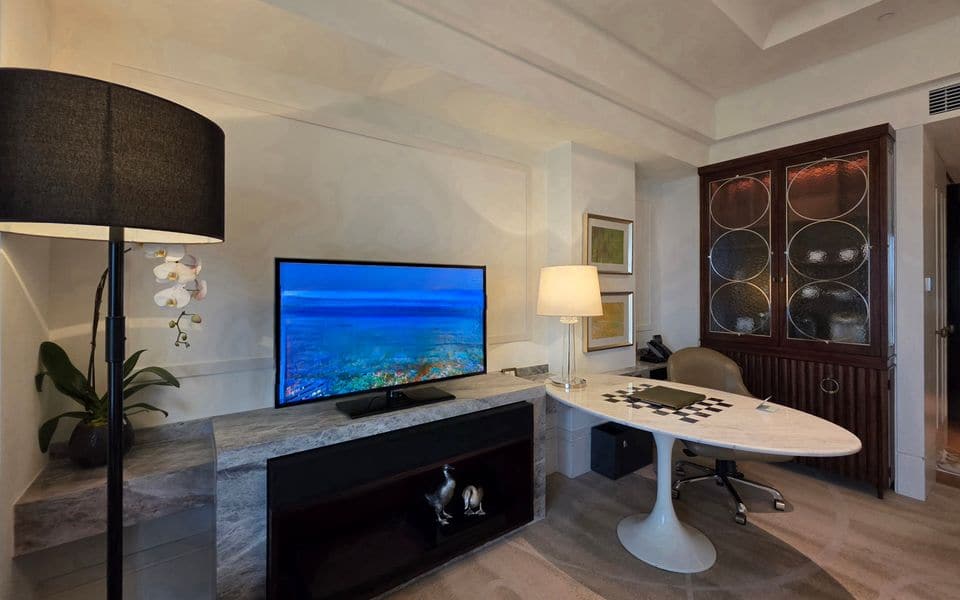
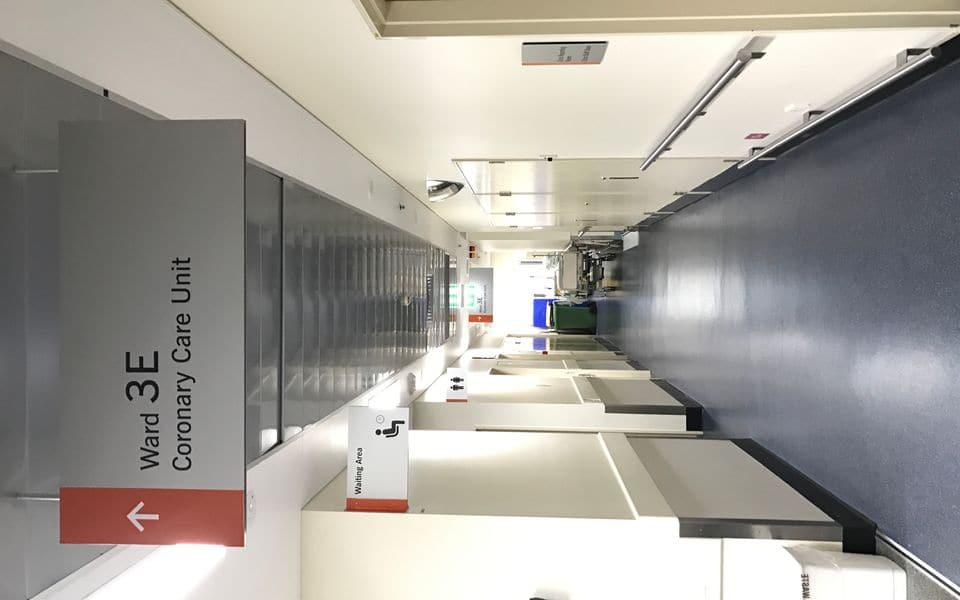
Illustrations and computer-generated renderings show typical arrangements, not our projects; photographs are credited on the credits page. Select an image to enlarge it.
In Riyadh and across Saudi Arabia
Public address and sound systems in Riyadh, Jeddah and across Saudi Arabia
Design and installation of public address and background music systems for mosques, schools, hospitals, malls and factories in Riyadh, Jeddah and across Saudi Arabia: evenly spaced speakers, zoned paging, background music, and an interface to the fire alarm for evacuation announcements where required. We install sound systems for mosques, conference rooms, cafés and restaurants, from ceiling speakers and amplifiers to paging and zoned music.
Common questions
Can I page one area only?
Yes, the building is split into zones and you page one, several or all from a microphone or a telephone.
Can it be used for emergency evacuation?
We design the interface to the fire alarm and select suitable equipment, while the fire alarm itself stays with its specialist contractor.
What is the difference between PA and background music (BGM)?
PA is for clear announcements and paging; BGM is ambient music. One system can do both in independent zones.
Do you install sound systems for mosques and cafés?
Yes, with an acoustic design that accounts for space and reverberation, and separate sound zones.
Manufacturers
Brands commonly specified in Saudi projects
- Bosch
- TOA
- Bogen
- Biamp
- Dynacord
- Apart Audio
Names belong to their owners. Listing a brand shows the systems we design around; it does not mean a partnership or a dealership.